

Buy-on-Board Consumption Analytics Software
Galley XAI consumption analytics software uses machine learning to forecast buy-on-board demand by city-pair, time of day, and season. Auto-pilot mode adjusts loading quantities flight by flight, eliminating regulatory fresh-food spoilage and consolidating galley space — enabling return catering and reducing fuel burn across the fleet.

Minimise waste and maximise fresh buy-on-board profitability with AI-driven auto-pilot loading, mobile tracking, and route-specific consumption analytics.
Per-flight buy-on-board demand forecasting

Galley XAI Consumption Analytics is an aviation-specific machine learning engine that predicts buy-on-board demand per flight, replacing the historical-average loading models that overshoot or undershoot every rotation. Regulatory guidelines require unconsumed fresh food to be discarded after a flight returns across an international border, so loading precision is directly tied to margin. The platform analyses sales trends alongside consumption data, evaluating city-pair, time of day, season, and other operational variables to predict passenger demand more precisely.
The data speaks for itself. Operators using Galley XAI Consumption Analytics with Auto-Pilot mode have reported up to 10x gains in profitability on their buy-on-board offerings. We achieve this by tracking the consumption data from every flight. Machine learning algorithms compile the results, tracking every relevant detail, and the AI auto-pilot system adjusts the loading quantities for the next flight.
The result is maximum profitability and maximum customer satisfaction at the same time. The system loads just enough of each item so every passenger gets their preferred choice without leaving products to go to waste.
Accurate loading also significantly reduces overall galley weight. By predicting consumption more precisely across all provisioned items, airlines avoid over-catering. Consolidation of stowage space has enabled some operators to execute return catering from their base station, eliminating destination uplifts and costly belly loadings — an approach that has saved an estimated $1,500 USD per transatlantic flight in one operator’s network.
Today, IFCS operates the latest generation of its ML/AI analytics platform, with results now described as spectacular.
Buy-on-Board Optimisation
Machine learning forecasts passenger demand more precisely to prevent fresh-food spoilage and increase retail margins.
Galley Stowage Optimisation
Consolidate stowage space to eliminate destination uplifts and reduce fuel burn across your fleet.
What teams do with Galley XAI Consumption Analytics

Catering and airline operations teams use Galley XAI to manage waste and optimise stowage through six core capabilities.
- Fresh buy-on-board optimisation. Use machine learning to evaluate city-pairs, holidays, and departure times so loading prevents regulatory spoilage.
- Galley space consolidation. Free stowage to enable return catering strategies, eliminating destination uplifts and costly belly loadings.
- AI vision tray analysis. Ingest visual data from AI vision scanners to categorise meal-tray consumption and passenger preferences.
- Auto-Pilot loading. Allow the system to adjust loading quantities for upcoming flights automatically, without manual planner intervention.
- Hybrid service analytics. Analyse sales trends and consumption data simultaneously so hybrid service models load the most profitable mix of items.
- Seasonal strategy tuning. Monitor consumption patterns across seasonal peaks and troughs to refine buy-on-board strategy and maximise per-flight revenue.
Why airlines and caterers choose Galley XAI
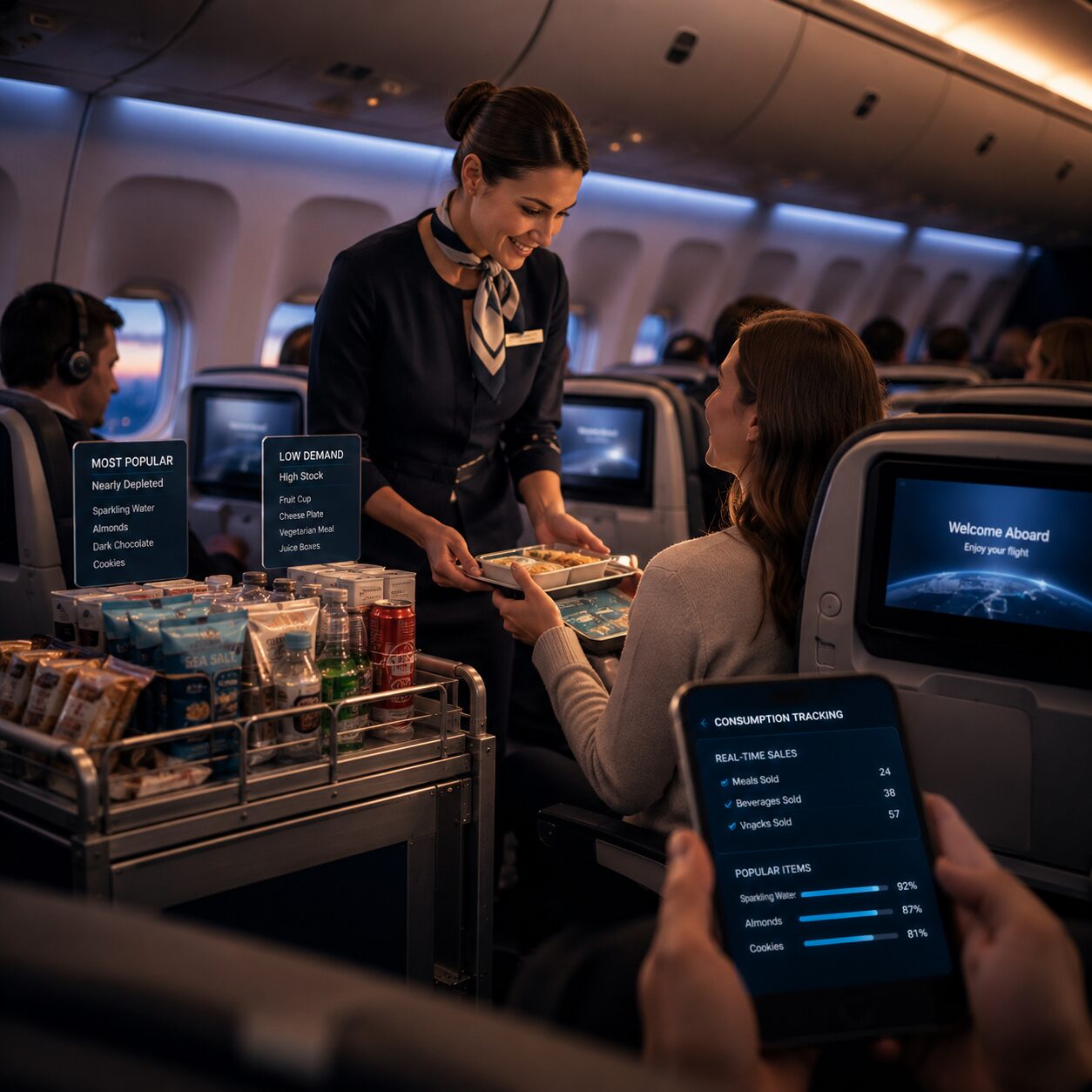
Aviation operators including Oman Air, Salam Air, and Transom Catering rely on IFCS to drive sustainability and profitability.
Galley XAI differentiates itself from legacy tools like Paxia, AeroChef, and CAE Flightscape by offering a complete auto-pilot loading mechanism tailored for both operational savings and retail success. Rather than presenting historical data for manual review, our system actively processes dozens of variables to determine future loadings. This direct automation prevents the forced disposal of high-margin fresh food at international borders, removes unneeded weight from the aircraft to enable return catering, and yields immediate financial returns that static planning tools cannot replicate.
Outcomes measured by aviation operators
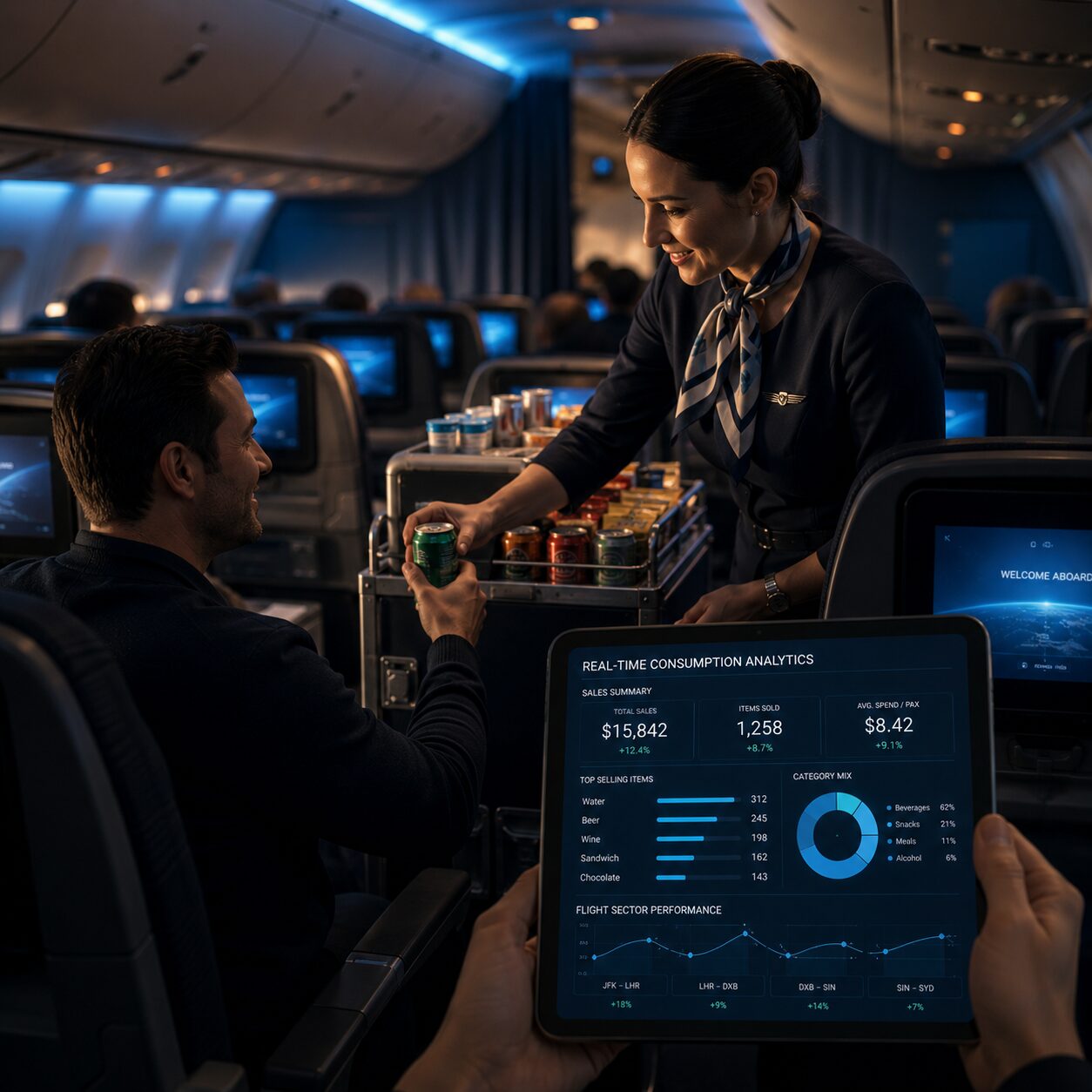
Airlines and caterers utilising IFCS for consumption analytics monitor concrete efficiency and financial metrics. Operators measure outcomes including:
- A 10x increase in buy-on-board profitability by aligning fresh-food supply with passenger demand.
- An estimated $1,500 USD saved per transatlantic flight by enabling base-station return catering, plus direct fuel savings from reduced galley weight.
- Significant reductions in onboard food spoilage.
- The elimination of manual adjustments through AI-driven auto-pilot loading.
Maximise your buy-on-board margins
Leverage auto-pilot machine learning and route-specific analytics to optimise your flight provisioning, reduce fuel costs, and eliminate fresh-food waste. Book a demo to see how IFCS can reduce complexity, streamline operations, and help your team do more with less.
Frequently Asked Questions
How does the system handle fresh buy-on-board items?
Machine learning forecasts demand by city-pair, time of day, and season. Auto-Pilot mode then sets loading quantities flight by flight so fresh inventory matches predicted consumption — preventing the regulatory discard of unsold product after international returns.
How does this enable return catering?
By forecasting demand more precisely across every item, Galley XAI consolidates galley stowage space. Operators can load both outbound and return service from the base station, eliminating destination uplifts, belly loadings, and the associated fuel cost.
What is Auto-Pilot mode?
Auto-Pilot is the loading-automation layer of Galley XAI. The platform processes consumption data, sales trends, and operational variables, then adjusts loading quantities for upcoming flights automatically — without a planner re-entering data.
Can consumption data be used for billing?
Yes. Post-flight consumption records feed directly into the Galley XAI invoicing module, where charges are validated against actual provisioning rather than estimated counts.
How does the AI vision scanning work?
AI vision scanners ingest visual data from returning meal trays and categorise items by consumption state. The platform uses that data to refine passenger preference models and tune future loadings.